Sourcing private label beauty lights involves more than finding a lamp that looks suitable in a catalogue. For distributors, beauty-equipment brands and e-commerce sellers, the stronger sourcing process starts with the target user and then evaluates lighting performance, mechanical structure, customization, compliance, packaging and production requirements.
The goal is not simply to find the lowest-priced beauty light. It is to select a product and supplier combination that fits your market, brand positioning and expected order model. This guide explains the main decisions B2B buyers should make before moving from product discovery to samples and bulk production.
What Are Private Label Beauty Lights?
Private label beauty lights are professional lighting products sold under a buyer’s own brand rather than the original manufacturer’s consumer-facing brand. Depending on the project, customization can range from adding a logo and branded packaging to changing colors, structures, functions or other product details.
The category can include lighting for manicure desks, lash and esthetician treatment areas, makeup workstations and other professional beauty environments.
For buyers, the important distinction is that private labeling is not one fixed service level. Two projects described as “OEM” can involve very different amounts of engineering, tooling, testing and production work.
OEM, ODM and Private Label: What Is the Difference?
The terms OEM, ODM and private label are often used loosely in supplier conversations, so buyers should define the actual project scope instead of relying only on the label.
| Project Type | Typical Starting Point | Buyer Consideration |
|---|---|---|
| Private label | An existing product platform | Branding, packaging, color and market presentation |
| OEM | An existing or modified product specification | Specific requirements defined by the buyer |
| ODM | Supplier design and development capability | Greater product or structural development may be involved |
In practice, projects can overlap. A buyer might begin with an existing lamp, change its finish and packaging, and later request structural or functional modifications. The most useful question is therefore: what exactly needs to be changed from the supplier’s existing product?
1. Define the Target Beauty Application First
Before discussing logos or packaging, identify who will actually use the light.
A nail technician working at a manicure desk has different spatial requirements from a lash artist working around a treatment bed. An esthetician may need broader positioning flexibility, while a compact home studio may prioritize space efficiency.
Define the intended application in practical terms:
- target professional user;
- desk, treatment-bed or floor-standing environment;
- typical working distance;
- required illuminated area;
- available floor or desk space;
- whether the lamp must move between workstations;
- whether photography or video is also part of the use case.
This prevents a common sourcing mistake: selecting a product because it photographs well without confirming that its structure works in the target professional environment.
2. Choose the Product Structure Before Fine-Tuning Specifications
Professional beauty lighting is available in several physical configurations. The structure often has as much impact on user experience as the LED specification.
Desktop and Base-Mounted Lights
These can suit manicure tables and dedicated workstations where the buyer wants a self-contained product without permanent installation. Buyers should evaluate the footprint of the base as well as the available working clearance beneath the light.
Clamp-Mounted Lights
Clamp structures can preserve desk space but require a suitable mounting surface. Check table-edge thickness, stability and the lamp’s usable reach after installation.
Floor-Standing Beauty Lights
Floor models can be positioned independently from furniture and are useful around treatment beds or multifunction beauty spaces. Base dimensions, stability and movement around the technician’s chair should be evaluated.
Half Moon and Wide-Area Structures
Curved designs are frequently used where buyers want broad illumination across a beauty workstation. LIEQI’s professional half moon lighting range provides examples of different workstation configurations that B2B buyers can compare.
3. Compare Lighting Performance as a System
Wattage should not be used as a shortcut for professional lighting quality. Buyers should evaluate several specifications together.
Brightness and Dimming
Check whether the available brightness range remains useful at the actual working distance. Adjustable output gives professionals more control when ambient lighting changes.
Color Temperature
Adjustable color temperature can help a beauty workstation adapt to warmer or cooler ambient environments. Confirm the actual range offered by the model being evaluated rather than assuming all professional lamps use the same settings.
Color Rendering
CRI provides information about color-rendering performance. This can be particularly relevant in manicure, makeup and other beauty applications where users need to evaluate colors and fine visual details.
Coverage and Shadows
A strong specification does not compensate for poor physical coverage. Test how the lamp illuminates the real working area and whether the technician’s hands, tools or working position create distracting shadows.
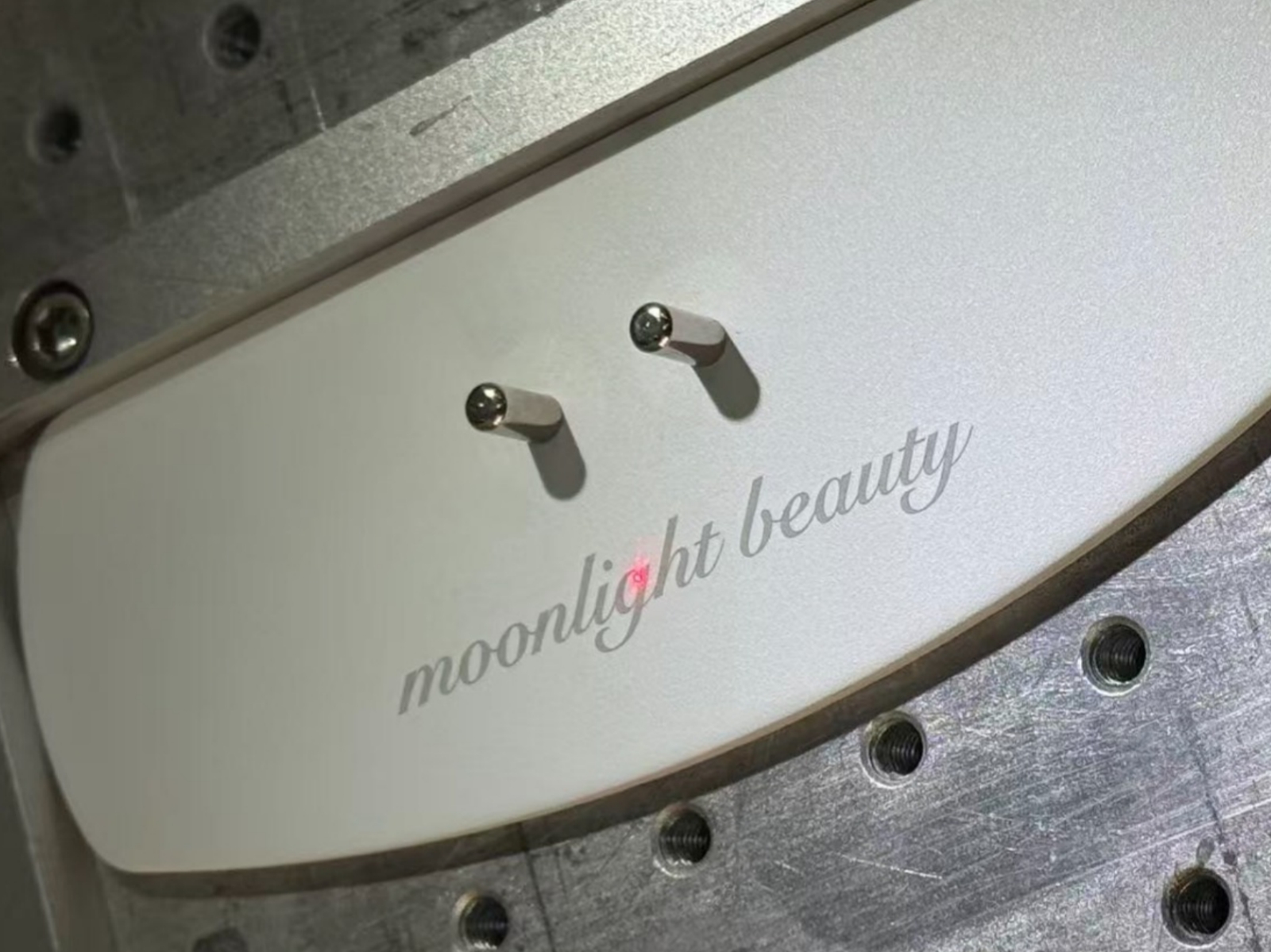
4. Decide How Much Customization Your Brand Actually Needs
Customization adds differentiation, but every requested change can also affect development work, sample approval, cost and production complexity.
Start by separating essential brand requirements from optional changes.
Depending on the product and project, buyers may discuss areas such as:
- brand logo;
- product color or surface finish;
- packaging artwork;
- instructions and labels;
- accessory configuration;
- electrical or plug requirements;
- structural or functional modifications.
Do not assume that every existing model supports every type of customization. Send the supplier a written requirement list and ask which changes are available for the specific product under consideration.
LIEQI provides a dedicated process for discussing custom lighting requirements with B2B buyers.
5. Treat Packaging as Part of the Product
Packaging has both commercial and operational functions in a private-label project. It communicates the brand to the end customer, but it must also protect the lamp and its accessories through wholesale transportation and fulfillment.
Before approving packaging, confirm:
- what components and accessories are included;
- how the product is protected inside the carton;
- whether assembly instructions are required;
- label and barcode requirements;
- destination-market language requirements;
- outer-carton information needed by your logistics process.
For e-commerce buyers, product dimensions and packaging should also be considered alongside warehousing and fulfillment costs rather than after the product has already been selected.
6. Confirm Compliance Requirements for the Destination Market
Compliance should be discussed early, not after a purchase order is ready.
The documentation required for an electrical lighting product can depend on the destination country, product configuration, power supply and sales channel. Buyers should identify their target markets and confirm the applicable requirements with qualified compliance professionals and the supplier.
Ask for documentation relevant to the exact model and configuration you intend to purchase. Avoid assuming that a document for one product automatically covers another product simply because the two lamps look similar.
The same principle applies when changing electrical components or other specifications during an OEM project: determine whether the modification affects existing documentation or creates additional testing requirements.
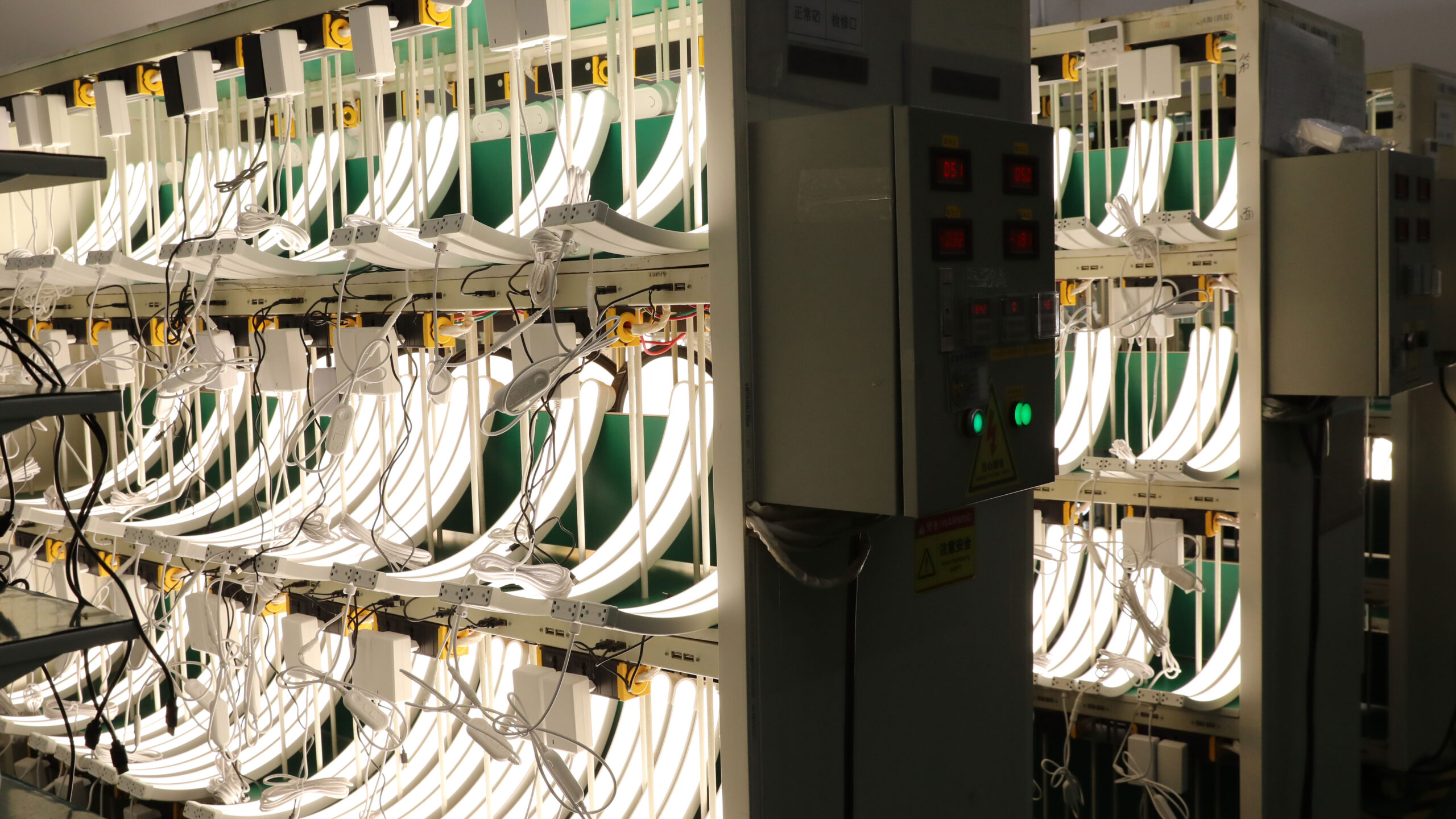
7. Evaluate the Sample Like a Buyer, Not Just a User
A sample is the point where catalogue information should be tested against the actual business requirement.
Set up the lamp in the intended beauty workstation and check:
- illumination across the real working area;
- brightness and color-temperature adjustment;
- mechanical stability;
- arm, head or height adjustment;
- controls and ease of use;
- base or clamp fit;
- cable and adapter arrangement;
- assembly process;
- surface finish and visible workmanship;
- packaging and accessory completeness.
Record the findings rather than approving a sample based on general appearance. Photos, measurements and written comments make later revisions easier to communicate.
8. Freeze the Specification Before Bulk Production
Once the sample is approved, the buyer and supplier should have a clear reference for what is being manufactured.
A useful final specification can include the model, finish, lighting configuration, electrical requirements, accessories, logo placement, packaging artwork, labels and other agreed custom details.
This is particularly important when several versions of a similar lamp exist. Terms such as “white half moon lamp” or “floor lash light” are not specific enough to serve as a final production reference.
Buyers planning larger orders can also review LIEQI’s bulk manufacturing capabilities when discussing the production stage of a project.
9. Compare Suppliers Beyond Unit Price
Unit price is important, but it should be compared on an equivalent specification and service basis.
A lower quotation may reflect a different product configuration, packaging method, accessory set or customization scope. Before comparing quotations, make sure suppliers are responding to the same requirement.
For a long-term private-label program, buyers should also evaluate communication quality. The supplier should be able to clarify specifications, identify requirements that need confirmation and document agreed changes before production.
A useful sourcing comparison therefore includes:
- product fit for the target application;
- sample performance;
- customization scope;
- documentation relevant to the target market;
- packaging;
- production and quality-control process;
- commercial terms;
- communication and change management.
10. Build a Product Range Instead of Treating Every Lamp the Same
Distributors and beauty-equipment brands do not necessarily need one universal lamp.
Different customer groups can require different combinations of structure, coverage and price. A compact nail workstation light, a wider half moon lamp and a floor-standing treatment light may serve separate professional applications even when all belong to the broader beauty-lighting category.
Thinking in terms of a product range can also make private-label sourcing more coherent. Instead of adding unrelated models, buyers can build an assortment around specific users and workstation needs.
Private Label Beauty Light Sourcing Checklist
| Stage | Key Question |
|---|---|
| Market definition | Who is the target professional and where will the lamp be used? |
| Product selection | Which structure best fits that workstation? |
| Lighting evaluation | Do coverage, brightness, color temperature and color rendering meet the requirement? |
| Customization | Which changes are essential for the brand? |
| Compliance | What requirements apply in the destination market? |
| Sample | Has the complete product been tested in a realistic setup? |
| Specification approval | Are all product, branding and packaging details documented? |
| Bulk production | What controls keep production aligned with the approved specification? |
FAQ for Private Label Beauty Light Buyers
Can an existing beauty lamp be sold under a private label?
Depending on the product and supplier, an existing platform may support branding and packaging customization. Buyers should confirm the available options for the exact model before planning the launch.
Should I customize the product structure for my first order?
Not necessarily. If an existing structure already meets the target user’s needs, branding or packaging changes may provide a simpler starting point. Structural modifications make more sense when they solve a clear product or market requirement.
What should I send a beauty light manufacturer when requesting a quotation?
Provide the target product or application, estimated quantity, destination market, required branding, packaging needs and any technical or structural changes. A clearer request makes quotations easier to compare.
Why should I order a sample before a wholesale order?
A sample allows you to evaluate lighting performance, structure, controls, finish, accessories and packaging in the intended application before committing to bulk production.
How should I compare two OEM beauty light quotations?
First confirm that both quotations cover equivalent specifications, accessories, customization and packaging. Then compare commercial terms alongside sample quality, documentation, communication and production support.
Plan Your Beauty Lighting Project Around the End User
A successful private-label beauty light project starts with a professional use case, not a logo. Define the target workstation, select the right product structure, test lighting performance, clarify customization and compliance requirements, and approve a complete sample before bulk production.
This approach gives distributors and beauty-equipment brands a stronger basis for comparing suppliers and building a product range that serves real professional needs.
If you are evaluating professional beauty lights for wholesale, OEM, ODM or private-label distribution, contact LIEQI to discuss your target application, sample requirements and customization project.