Whether you’re starting as a nail technician or simply want to understand how to keep nails healthy and beautiful, this guide covers the most important basics — nail anatomy, proper care, common mistakes to avoid, and how professional lighting and tools (like your company’s half-moon lamp) can elevate both safety and outcome quality.
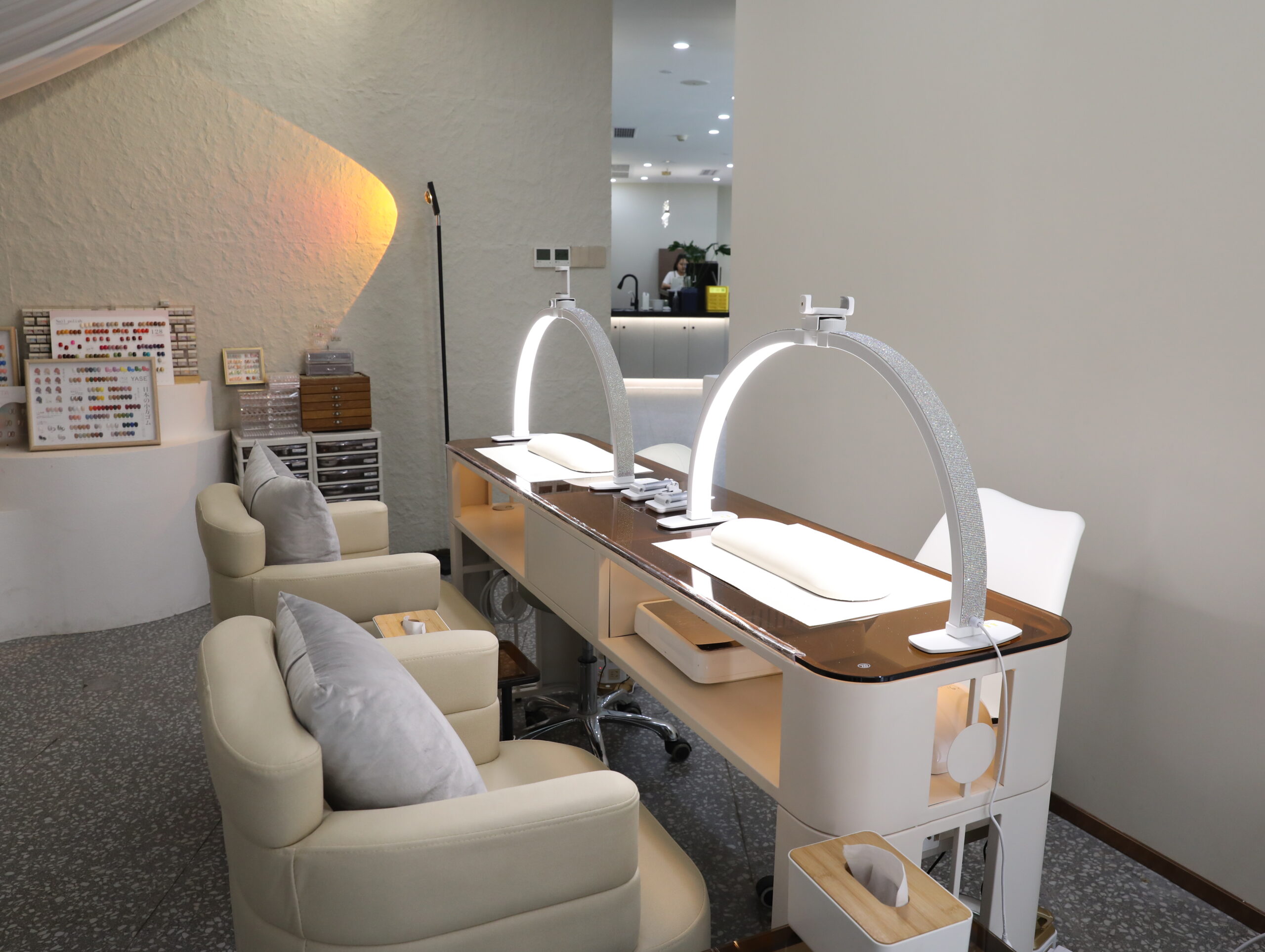
(Salon environment / lamp in action)
1. Understanding Natural Nails & Why Nail Health Matters
Your nails are more than a canvas for polish or art — they reflect your overall health, and proper care is essential to avoid brittleness, infection, discoloration or breakage. Healthy nails are smooth, even in colour, free from ridges or weak spots.
1.1 Nail Anatomy & Growth Basics
- Nails are made of keratin — a type of protein also found in skin and hair.
- The main parts of a nail: nail plate (visible hard part), nail bed (skin underneath), and cuticle (protective tissue at base).
- Healthy nails remain hydrated — dryness, chemical exposure, or trauma can cause peeling, splitting or brittleness.
2. Fundamental Nail Care Habits
For both everyday maintenance and professional manicure prep, these habits form the foundation of healthy, strong nails.
- Keep nails clean and dry. Wash hands gently; after water exposure, dry thoroughly (especially around cuticles). Excess moisture weakens nails and increases risk of fungus.
- Trim and file regularly. Use quality clippers and a fine-grit nail file. Trim straight across, then gently round corners to avoid ingrown nails or splitting.
- Moisturize nails and cuticles daily. Apply cuticle oil or hand cream to keep the nail bed and surrounding skin hydrated — this improves flexibility and reduces breakage.
- Avoid harsh chemicals and over-processing. Frequent use of acetone removers, aggressive buffing, or harsh cleaning detergents can dry out nails and cause damage. When cleaning or handling chemicals at home, wear protective gloves.
- Don’t use nails as tools. Avoid prying, scraping, or using nails to open lids/packages — these can easily lead to cracks or chips.
3. Professional Manicures & Enhancements: What to Know
When offering manicures, gel nails, or enhancements in a salon setting, it’s important to follow correct protocols to protect natural nails and deliver high-quality results. Mistakes are common among beginners, but with care, you can significantly reduce risks.
3.1 Proper Nail Prep = Foundation of Quality Work
- Push back (but don’t over-clip) cuticles to preserve nail bed health.
- Lightly buff the nail plate to remove shine and create a better base for polish or gel — but avoid over-buffing which thins the nail.
- Use a nail dehydrator / primer if doing gel or acrylic enhancements — this improves adhesion and reduces lifting.
3.2 Choosing Products Carefully
The quality of polishes, gels or overlays matters. Opt for nail-friendly formulas (ideally “3-free”, “5-free” etc.) to avoid harsh chemicals that can weaken nails over time.
3.3 Aftercare & Maintenance
- Apply cuticle oil or moisturizer after manicure to maintain hydration.
- Avoid exposing nails to prolonged water or harsh detergents without protection. Gloves help.
- Give natural nails a “breather” every few manicure cycles — continuous gel/overlay without breaks can cause thinning or brittleness.
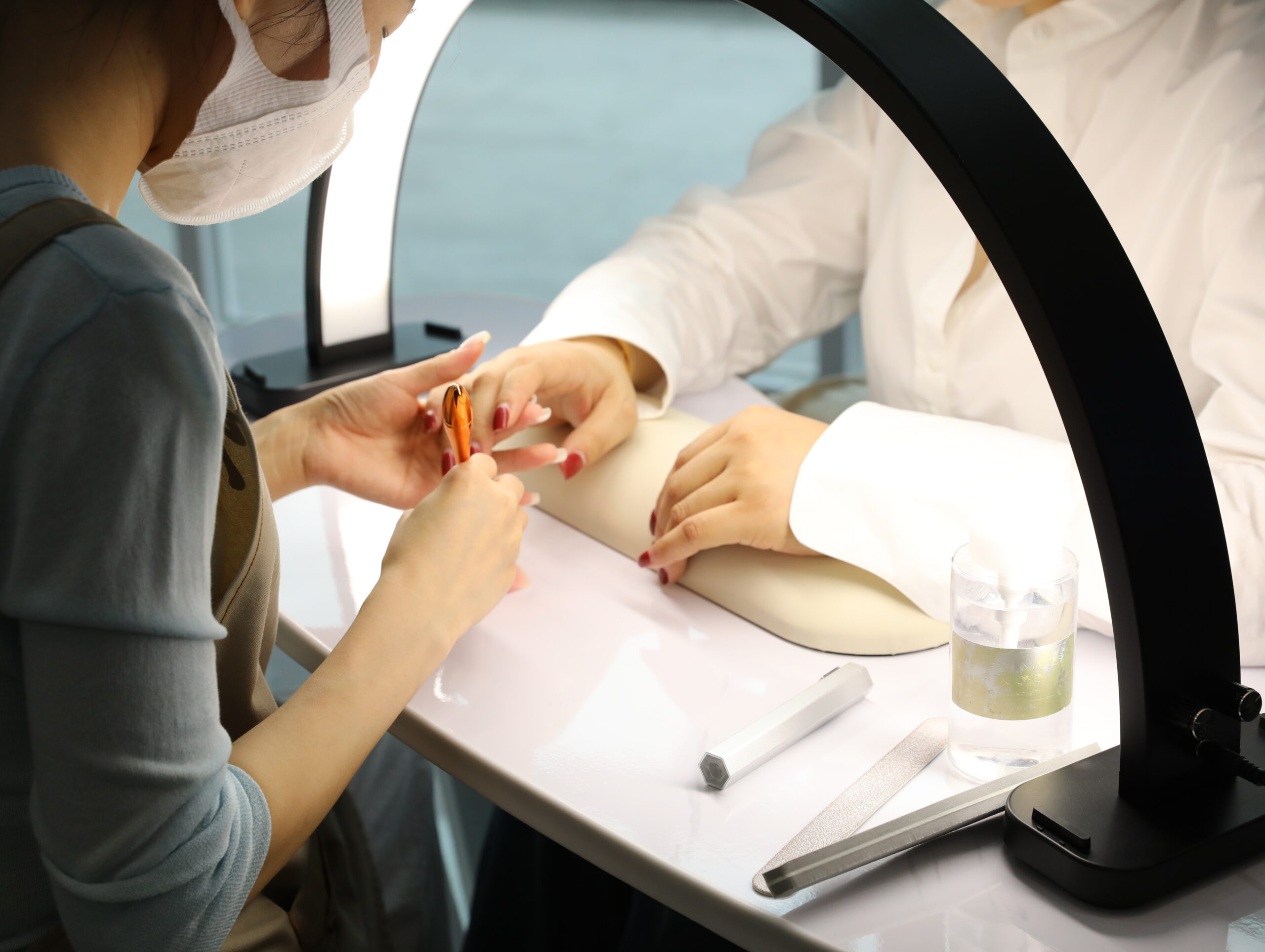
(Half-moon lamp lighting for manicure / nail extension work)
4. Why Proper Lighting & Tools Matter: Enhancing Safety & Quality
Beautiful manicure work isn’t just about technique — the right environment makes a big difference. Proper lighting helps nail technicians see tiny details, avoid mistakes, and work more precisely. For example, a curved, wide-arc lamp gives even, shadow-free light over the workstation — essential when shaping, filing, or doing detailed gel work.
Using good tools (quality clippers, files, buffers, sanitized implements) + proper lighting ensures each manicure is neat, safe, and durable. This lowers the risk of nail damage, uneven polish, or client complaints.
5. Summary & Best Practices Checklist
- Keep nails clean, dry, trimmed, and moisturized regularly
- Use gentle products; avoid harsh chemicals and rough treatment
- Prep nails carefully before polish or gel: cuticles, buffing, dehydration/priming
- Use proper tools, sanitized and high-quality
- Make sure your work area has sufficient, even lighting
- Aftercare is as important as the manicure — moisturizer, cuticle oil, and protection when doing chores
- Give nails a break periodically from polish/gel/overlays for natural recovery
By combining knowledge, hygiene, correct technique, good tools, and proper lighting, even a beginner nail technician can deliver beautiful, healthy, long-lasting manicures. Let this guide be your foundation — and remember: well-maintained nails reflect not only aesthetics but also professionalism and care.