Starting your journey as a lash technician can be both exciting and overwhelming. Mastering eyelash extension fundamentals is crucial for improving your technique, ensuring client safety, and creating beautiful, long-lasting lash sets. This guide covers essential lash theory, natural lash science, curls, materials, styling basics, and the importance of proper lighting—especially professional beauty lamps used during lash extension procedures.
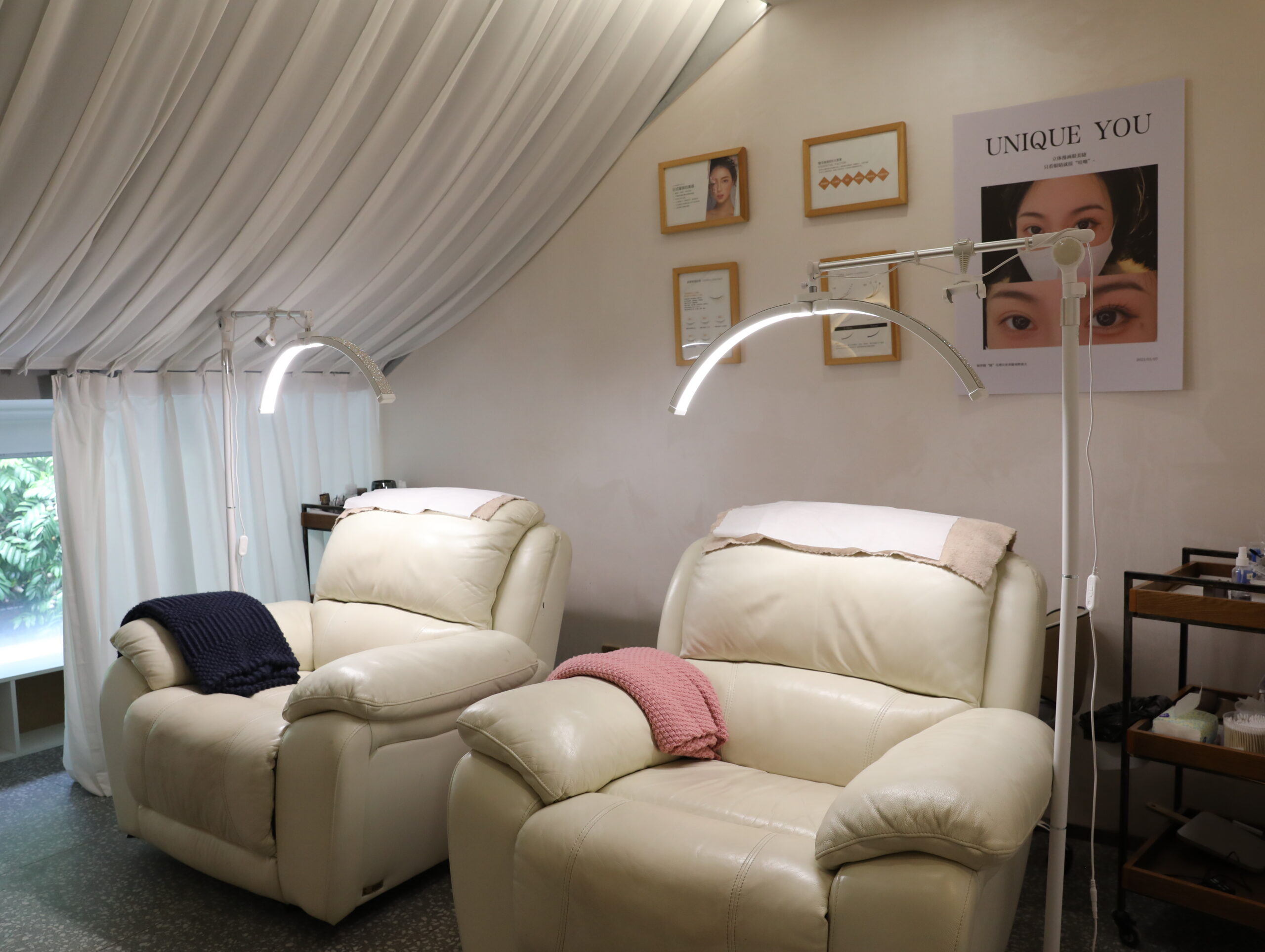
(LIEQI half-moon lamp photo used in a lash studio scene)
1. Understanding Natural Eyelashes
To perform safe and beautiful eyelash extensions, you must understand the structure and growth cycle of natural eyelashes. This knowledge helps you choose the correct lash lengths, thicknesses, and curls for each client, reducing the risk of overload or follicle damage.
1.1 Natural Lash Structure
Natural eyelashes grow in 2–3 rows, and their main function is to protect the eyes from dust and external particles.
- Upper lashes: 100–150 per eye, length 8–12 mm
- Lower lashes: 50–75 per eye, length 5–7 mm
- Upper lashes naturally curl upward, while lower lashes curve downward
1.2 Lash Growth Cycle
The complete growth cycle is about 3–5 months and includes three stages:
- Anagen (growth): 4–6 weeks of active growth
- Catagen (transition): 1–2 weeks, growth stops
- Telogen (resting): The lash sheds naturally
This is why clients generally require refills every 2–4 weeks.
2. What Are Eyelash Extensions?
Eyelash extensions involve attaching synthetic or natural fibers to each natural lash using professional adhesive. This enhances lash length, thickness, curl, and overall appearance without mascara.
- Enhances lash density
- Brightens and enlarges the eyes
- Reduces daily makeup steps
- Provides long-lasting, natural-looking results
3. Lash Extension Materials
Common lash materials include:
- Mink-style lashes: Soft, natural finish
- Silk/S protein lashes: Lightweight and flexible
- Synthetic lashes: Bold, firm texture
4. Lash Lengths, Curls, and Thickness
4.1 Lash Length
Lash artists typically use multiple lengths to create a layered and natural effect.
4.2 Curl Types
- C Curl: Dramatic lift
- B Curl: Natural lift
- J Curl: Very natural
- L Curl: Ideal for monolids or hooded eyes
4.3 Thickness
0.03, 0.05, 0.07 mm for volume; 0.10–0.15 mm for classic sets.
5. Lash Styles & Techniques
- Classic: 1:1 application
- Volume: Multiple lightweight fans
- Hybrid: Classic + volume
- Camellia: Multi-length fans
- Colored lashes: For creative looks
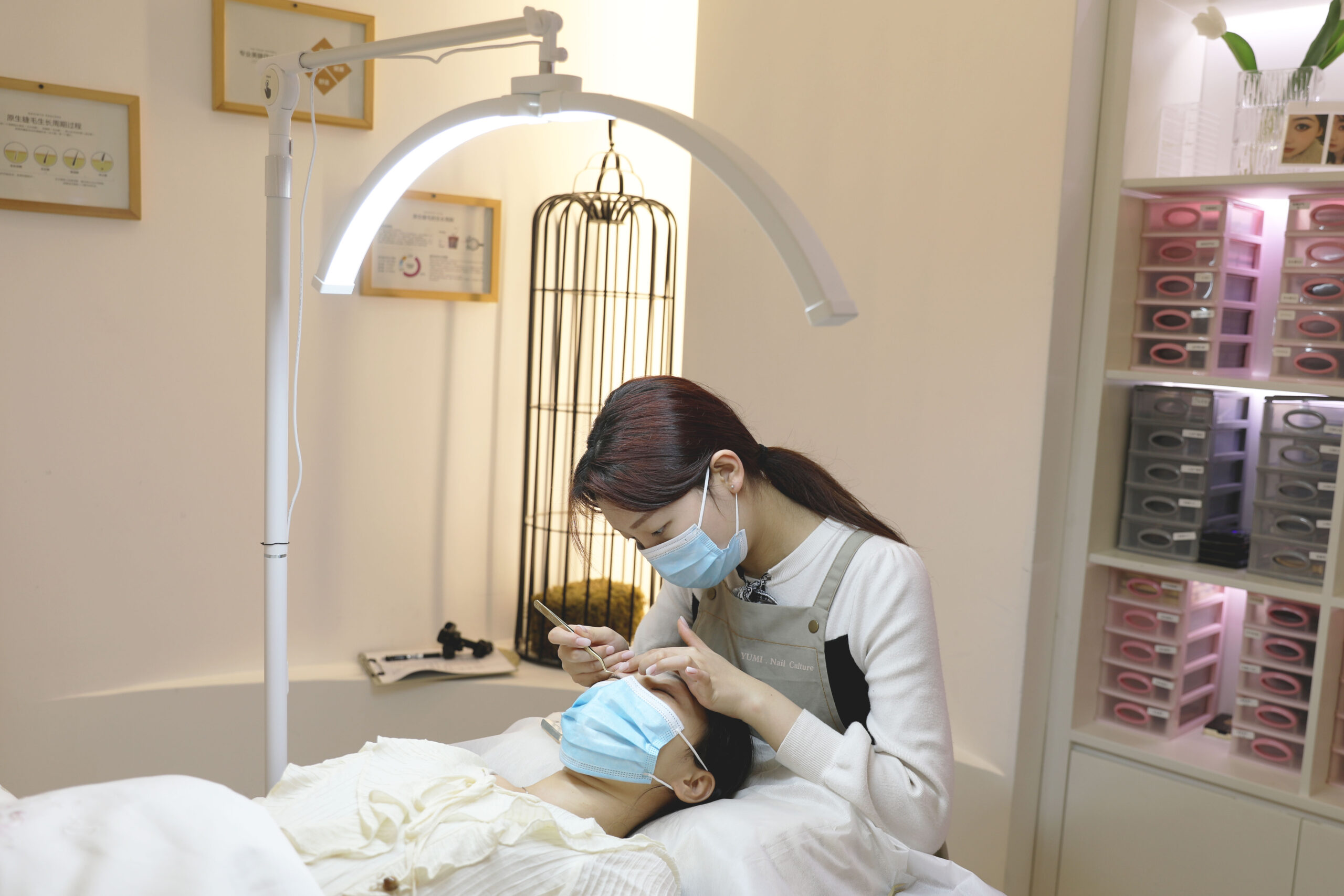
(Close-up photo of lash technician working under LIEQI half-moon lamp)
6. Importance of Proper Lighting for Lash Technicians
Good lighting is one of the most essential tools for lash artists. Precise isolation, clean attachment, and client comfort all depend heavily on the lighting setup. Poor lighting can lead to eye strain, slower application, and uneven lash placement.
Professional beauty lamps—especially wide, curved, soft-light lamps—provide:
- Uniform illumination without shadows
- Soft, eye-friendly light for both artist and client
- Accurate visibility during isolation and attachment
- Adjustable brightness and color temperature
Our Half-Moon Beauty Lamp is designed specifically for lash extensions, offering shadow-free illumination that enhances accuracy during detailed work.
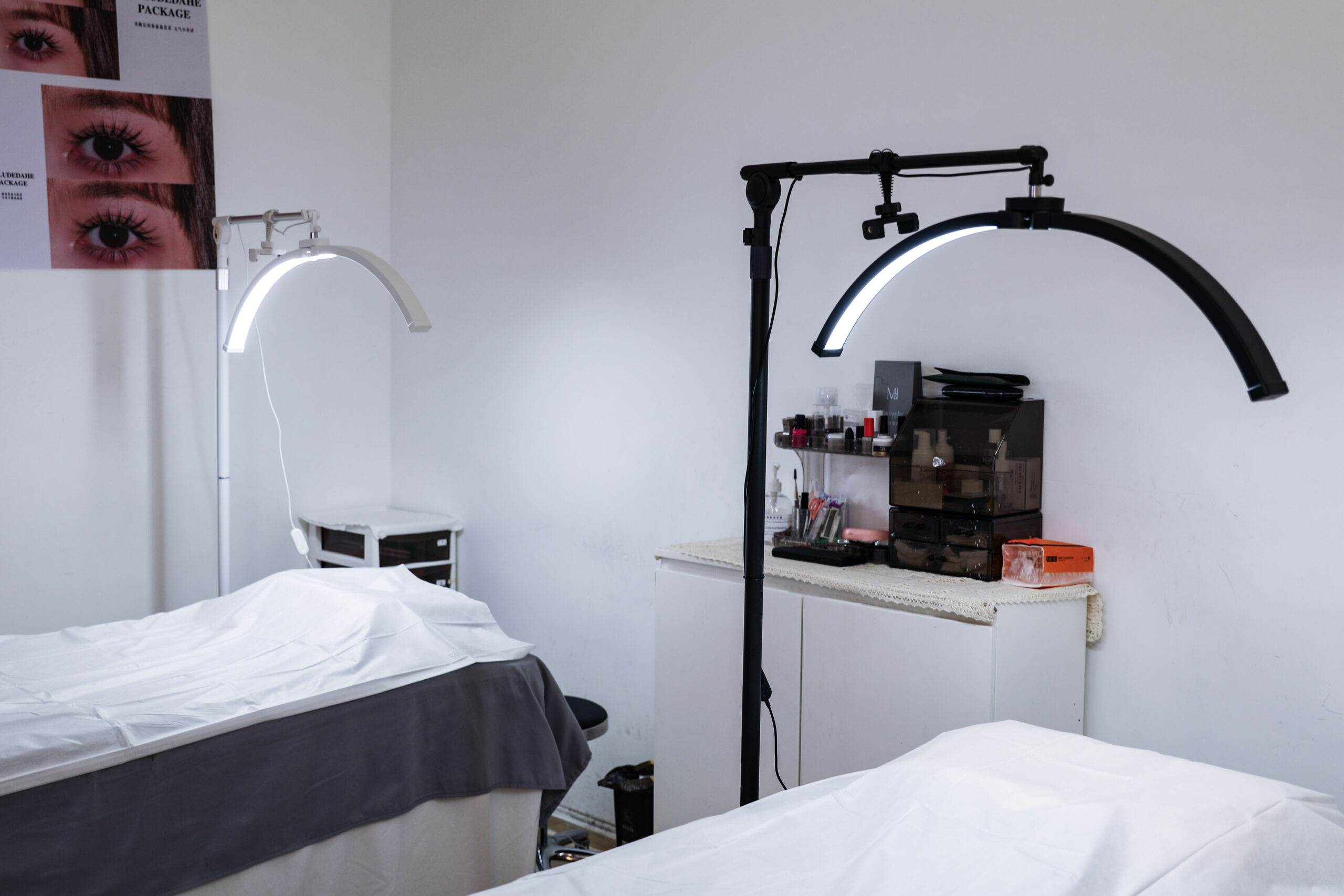
(LIEQI lamp + bed + technician working — full setup scene)
7. Final Tips for Beginner Lash Technicians
- Always prioritize client safety and comfort
- Work slowly to build up perfect placement technique
- Use proper lighting for consistent quality
- Study lash mapping to enhance design skills
- Keep practicing isolation—it’s the foundation of everything
With the right knowledge, tools, and lighting, every beginner lash technician can grow into a confident lash artist who creates beautiful, long-lasting lash sets.